Pay Your Bill   Self-Pay Pricing
New Mexico Orthopaedic Associates
  • About
    • About Our Practice
    • Patient & Visitor Code of Conduct
    • Accepted Insurances
    • Blog
    • Teams & Affiliations
    • Research & Innovation
    • Winrock in the Making
  • Our Providers
    • Physicians
    • Physician Assistants & Nurse Practitioners
    • Therapists
  • Search by Specialty
    • Back & Spine – Non-Surgical
    • Elbow
    • Foot & Ankle
    • Forearm
    • Hand & Wrist
    • Hip
    • Hip Replacement
    • Knee
    • Knee Replacement
    • Lower Leg
    • Neck
    • Shoulder & Clavicle
    • Shoulder Replacement
    • Upper Arm
    • Upper Leg
  • Services
    • Schedule an Appointment
    • Web Portal
    • Your Visit
      • About Your Visit
      • Accepted Insurances
      • Patient Privacy
      • Feedback
    • Imaging & MRI
    • Physical/Occupational Therapy & Rehabilitation
    • Medical Legal Services
    • Worklink
    • Surgery
      • NMSCO
      • Preparing For Your Surgery at NMSCO
  • Ortho Express
  • Contact
    • Contact Us
    • Winrock Clinic & Physical Therapy
    • Rio Rancho Clinic & Physical Therapy
    • NE Heights Physical Therapy
  • Medical Records
  • Careers
  • Menu Menu

Total Hip Replacement Exercise Guide

in Hip, Hip Replacement, Joint Replacement

From OrthoInfo &  the American Academy of Orthopaedic Surgeons

Regular exercise to restore strength and mobility to your hip and a gradual return to everyday

activities are important for your full recovery after hip replacement. Your orthopaedic surgeon

and physical therapist may recommend that you exercise for 20 to 30 minutes, 2 or 3 times a day

during your early recovery. They may suggest some of the exercises shown below.

This guide can help you better understand your exercise and activity program, supervised by

your physical therapist and orthopaedic surgeon. To ensure your safe recovery, be sure to check

with your therapist or surgeon before performing any of the exercises shown.

Early Postoperative Exercises

The following exercises will help increase circulation to your legs and feet, which is important

for preventing blood clots. They will also help strengthen your muscles and improve hip

movement.

Start the exercises as soon as you are able. You can begin them in the recovery room shortly

after surgery. You may feel uncomfortable at first, but these exercises will help speed your

recovery and actually diminish your postoperative pain.

Ankle Pumps

Slowly push your foot up and down. Repeat this exercise several times, as often as every 5 or 10

minutes. Begin this exercise immediately after surgery and continue it until you are fully recovered.

Illustration of ankle pumps

Ankle pumps

Ankle Rotations

Move your ankle inward toward your other foot and then outward away from your other foot.

Repeat 5 times in each direction.

Do 3 or 4 sessions a day.

Illustration of ankle rotations

Ankle rotatations

Bed-Supported Knee Bends

Slide your foot toward your buttocks, bending your knee and keeping your heel on the bed. Do not let your knee roll inward. Hold your knee in a maximally bent position for 5 to 10 seconds and then straighten.

Repeat 10 times.

Do 3 or 4 sessions a day.

Illustration of bed-supported knee bend

Bed-supported knee bends

Buttock Contractions

Tighten your buttock muscles and hold to a count of 5.

Repeat 10 times.

Do 3 or 4 sessions a day.

Illustration of buttock contractions

Buttock contractions

Abduction Exercise

Slide your leg out to the side as far as you can and then back.

Repeat 10 times.

Do 3 or 4 sessions a day

Illustration of abduction exercise

Abduction exercise

Quadriceps Set

Tighten your thigh muscle. Try to straighten your knee. Hold for 5 to 10 seconds.

Repeat this exercise 10 times during a 10-minute period, rest one minute and repeat.

Continue until your thigh feels fatigued.

Illustration of quadriceps set

Quadriceps set

Straight Leg Raises

Tighten your thigh muscle with your knee fully straightened on the bed. Lift your leg several inches. Hold for 5 to 10 seconds. Slowly lower.

Repeat until your thigh feels fatigued.

Illustration of straight leg raise

Straight leg raises

Standing Exercises

Soon after your surgery, you will be out of bed and able to stand. You will require help at first but, as you regain your strength, you will be able to stand independently. While doing these standing exercises, make sure you are holding on to a firm surface such as a bar attached to your bed or a wall.

Standing Knee Raises

Lift your operated leg toward your chest. Do not lift your knee higher than your waist. Hold for 2 or 3 counts and put your leg down.

Repeat 10 times.

Do 3 or 4 sessions a day.

Illustration of standing knee raise

Standing knee raises

Standing Hip Abduction

Be sure your hip, knee and foot are pointing straight forward. Keep your body straight. With your knee straight, lift your leg out to the side. Slowly lower your leg so your foot is back on the floor.

Repeat 10 times.

Do 3 or 4 sessions a day.

Illustration of standing hip abduction

Standing hip abduction

Standing Hip Extensions

Lift your operated leg backward slowly. Try to keep your back straight. Hold for 2 or 3 counts. Return your foot to the floor.

Repeat 10 times.

Do 3 or 4 sessions a day.
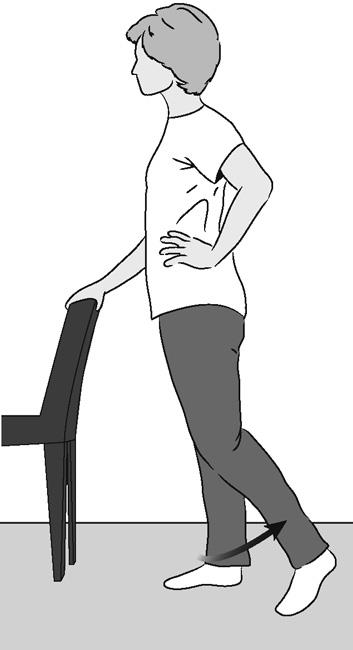
Illustration of standing hip extension

Standing hip extensions

Early Activity

Soon after surgery, you will begin to walk short distances in your hospital room and perform light everyday activities. This early activity aids your recovery and helps your hip regain its strength and movement.

Walking

Proper walking is the best way to help your hip recover. At first, you will walk with a walker or crutches. Your surgeon or therapist will tell you how much weight to put on your leg.
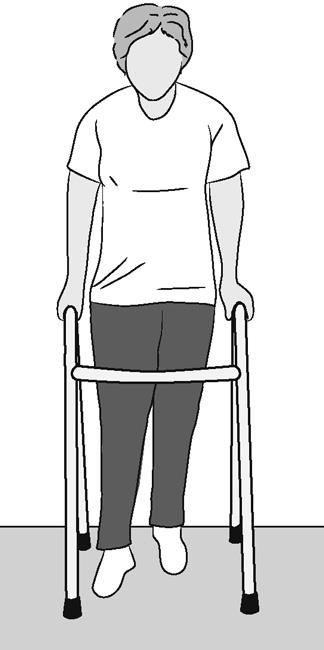
Illustration of woman using a walker after hip replacement

Early on, walking will help you regain movement in your hip.

Stand comfortably and erect with your weight evenly balanced on your walker or crutches. Advance your walker or crutches a short distance; then reach forward with your operated leg with your knee straightened so the heel of your foot touches the floor first. As you move forward, your knee and ankle will bend and your entire foot will rest evenly on the floor. As you complete the step, your toe will lift off the floor and your and knee and hip will bend so that you can reach forward for your next step. Remember, touch your heel first, then flatten your foot, then lift your toes off the floor.

Walk as rhythmically and smoothly as you can. Don’t hurry. Adjust the length of your step and speed as necessary to walk with an even pattern. As your muscle strength and endurance improve, you may spend more time walking. You will gradually put more weight on your leg. You may use a cane in the hand opposite your surgery and, eventually, walk without an aid.When you can walk and stand for more than 10 minutes and your leg is strong enough so that you are not carrying any weight on your walker or crutches, you can begin using a single crutch or cane. Hold the aid in the hand opposite the side of your surgery.

Stair Climbing and Descending

The ability to go up and down stairs requires both strength and flexibility. At first, you will need a handrail for support and will be able to go only one step at a time. Always lead up the stairs with your good leg and down the stairs with your operated leg. Remember, “up with the good” and “down with the bad.” You may want to have someone help you until you have regained most of your strength and mobility.

Stair climbing is an excellent strengthening and endurance activity. Do not try to climb steps higher than the standard height (7 inches) and always use a handrail for balance. As you become stronger and more mobile, you can begin to climb stairs foot over foot.

Illustration of woman climbing and descending stairs using a crutch

Stair climbing and descending using a crutch

Advanced Exercises and Activities

The pain from your hip problems before your surgery and the pain and swelling after surgery have weakened your hip muscles. A full recovery will take many months. The following exercises and activities will help your hip muscles recover fully.

These exercises should be done in 10 repetitions, 4 times a day. Place one end of the tubing around the ankle of your operated leg and attach the opposite end of the tubing to a stationary object such as a locked door or heavy furniture. Hold on to a chair or bar for balance.

Elastic Tube Exercises

Resistive Hip Flexion

Stand with your feet slightly apart. Bring your operated leg forward keeping the knee straight. Allow your leg to return to its previous position.
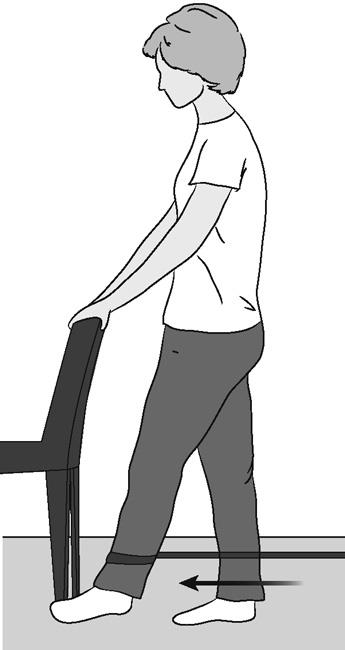
Illustration of resistive hip flexion

 Resistive hip flexion

Resistive Hip Abduction

Stand sideways from the door to which the tubing is attached and extend your operated leg out to the side. Allow your leg to return to its previous position.
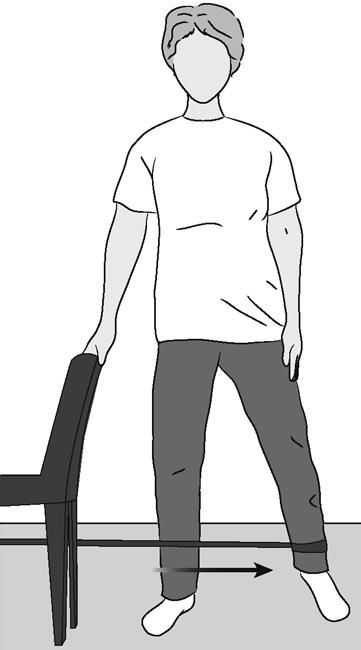
Illustration of resistive hip abduction

Resistive hip abduction

Resistive Hip Extensions

Face the door to which the tubing is attached and pull your leg straight back. Allow your leg to return to its previous position.
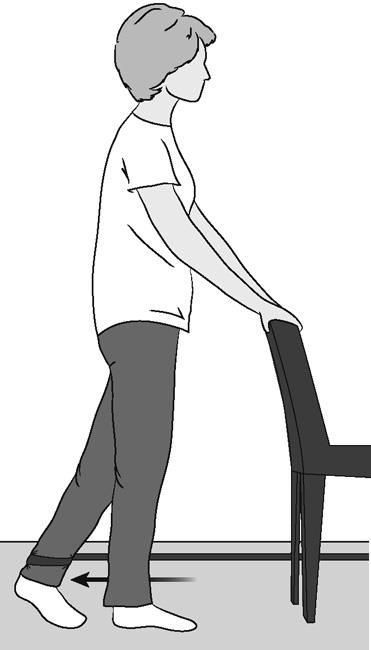
Illustration of resistive hip extensions

Resistive hip extensions

Exercycling

Exercycling is an excellent activity to help you regain muscle strength and hip mobility.

At first, adjust the seat height so that the bottom of your foot just touches the pedal with your knee almost straight. Pedal backwards at first. Ride forward only after a comfortable cycling motion is possible backwards.

As you become stronger (at about 4 to 6 weeks) slowly increase the tension on the exercycle. Exercycle for 10 to 15 minutes twice a day, gradually building up to 20 to 30 minutes, 3 or 4 times a week.

Walking

Walk with a cane until you have regained your balance skills. In the beginning, walk for 5 or 10 minutes, 3 or 4 times a day. As your strength and endurance improve, you can walk for 20 to 30 minutes, 2 or 3 times a day. Once you have fully recovered, regular walks of 20 to 30 minutes, 3 or 4 times a week, will help maintain your strength.


New Mexico Orthopaedics is a multi-disciplinary orthopaedic clinic located in Albuquerque New Mexico. We have multiple physical therapy clinics located throughout the Albuquerque metro area.

New Mexico Orthopaedics offers a full spectrum of services related to orthopaedic care and our expertise ranges from acute conditions such as sports injuries and fractures to prolonged, chronic care diagnoses, including total joint replacement and spinal disorders.

Because our team of highly-trained physicians specialize in various aspects of the musculoskeletal system, our practice has the capacity to treat any orthopaedic condition, and offer related support services, such as physical therapy, WorkLink and much more.

If you need orthopedic care in Albuquerque New Mexico contact New Mexico Orthopaedics at 505-724-4300.

https://nmortho.com/wp-content/uploads/2020/09/Total-Hip-Replacement-Exercise-Guide.jpg 300 833 nmortho https://nmortho.com/wp-content/uploads/2023/05/NMO-Logo-Teal.png nmortho2020-09-05 19:38:112022-03-28 12:56:16Total Hip Replacement Exercise Guide
A New Hip May Mean a Longer, Better Life

A New Hip May Mean a Longer, Better Life

in Hip, Hip Replacement

A hip replacement may help seniors live longer — for at least a decade anyway, a new study from Sweden suggests. “Our study suggests that hip replacement can add years to life as well as adding ‘life to years’ — increasing the chances of longer survival as well as improving the quality of life,” said study author Dr. Peter Cnudde. He’s an orthopedic surgeon with the Swedish Hip Arthroplasty Register in Gothenburg.

Read more

https://nmortho.com/wp-content/uploads/2020/02/A-New-Hip-May-Mean-a-Longer-Better-Life.jpg 300 833 nmortho https://nmortho.com/wp-content/uploads/2023/05/NMO-Logo-Teal.png nmortho2020-02-14 16:42:572022-03-28 12:57:52A New Hip May Mean a Longer, Better Life
What to Expect After a Hip Replacement

What to Expect After a Hip Replacement

in Hip, Hip Replacement, Surgery, Surgery Recovery

Article Featured on Home Care Assistance

Have You Decided it is Time for Hip Replacement Surgery?

That aching, painful and stiff hip has reduced your quality of life. You can’t enjoy the activities you used to love, like a good golf game, a walk around the block or even playing with the grandkids, without constant pain.

Over 300,000 people have hip replacement surgery each year in the United States. Before you decide to join this group, it is important to know what to expect following surgery. What will you experience after your hip replacement? When will you feel back to normal? What can you do to speed your recovery?

Pain After a Hip Replacement

First things first, hip replacement surgery will hurt. All surgery does! Be prepared that you will experience a significant amount of discomfort in the first three days following surgery. Your mobility will be limited, and you will need to depend on others to help you with your regular activities of daily living. Even simple things like going to the bathroom will require assistance.

On the first day, a significant amount of surgical pain medication will be in your system. You may feel groggy but not as uncomfortable. On the second day, you will likely be able to get out of bed and start moving with assistance. Although you had surgery on the largest joint in your body, you will be walking on it in only one or two days.

Be ready for the third day after surgery. You will probably feel like you got hit by a truck. After surgery, your body sends a large number of inflammatory cells to the injured area in order to help with the healing process. These levels will be at the highest on day three. Inflammation means swelling and swelling means pain. Talk to your doctor their recommendations for using ice and taking an anti-inflammatory medication starting on the day of surgery. But remember, typically, once you get through day three the swelling and pain will get better.

Walking After Hip Replacement Surgery

Most likely, you will be up and walking the day after your surgery. Take it slow and don’t push yourself beyond what you can handle. Getting up and active following surgery is vital to speeding up your recovery after a hip replacement. Try to exercise for 20-30 minutes at a time. The first day that might just mean getting out of bed and to the hallway. Don’t feel discouraged by this!

Moving around will not only speed up your recovery but will also increase the circulation to your legs and feet which will reduce your chance of getting a blood clot. Blood clots are a serious risk following all types of surgery but can be prevented by early movement and exercise.

Getting out of bed will also help to maintain and increase your muscle strength while preventing your new hip from getting stiff. You’ll want to take full advantage of that new level of hip movement. Don’t forget that getting out of bed and being able to walk with a walker or cane is one of the goals you need to accomplish before going home from the hospital.

Your Hip Replacement Recovery Checklist

Typically, after two to four days you will be discharged from the hospital to either your home or to a rehabilitation facility. Here are some goals to use as a checklist when transitioning back to your home. Make sure that:

  • You can get out of bed by yourself.
  • Your pain is adequately under control. This doesn’t mean you’re pain-free but it should be manageable.
  • You can eat, drink, sleep and go to the bathroom.
  • You can walk with a cane, walker or crutches.
  • You’re ready to do home exercises on your own.
  • You know what you need to do to protect your new hip from an injury.

Before you go home, you will need to have someone available to help you at home. This can be a friend, family member or a caregiver. At home, you will want to make sure that your furniture is set up so that you can get around your house easily.

What Will Hip Replacement Recovery be Like?

It’s normal to have questions about what the healing process will look like after surgery. So we’ve gathered the answer to common questions.

When Can I Shower?

You will not be showering until you get the go-ahead from your surgeon because you need to keep the incision dry. But a sponge bath will feel heavenly when you get home! The first two weeks you will be at your highest risk of infection, so report any signs of redness, drainage or fever. Your surgical staples will usually come out on day 10-14 and then you can bathe or shower again.

When Can I Start Walking?

After your surgical staples are removed, you’ll be able to start to work on walking without a walker or cane. Don’t forget to move around as much as you can while at home. Make sure you do the physical therapy exercises you have set up, go for light walks and remember to rotate your ankles, bend your knees and practice leg raises while sitting up or lying down.

When Can I Drive?

You can usually start driving within three to six weeks following hip replacement surgery. However, you will need to make sure that you are no longer taking any pain medication that affects your response time or makes you groggy. Initially, you will likely find that an automatic transmission is easier to drive. Also, make sure you can tip your foot up and down without pain prior to driving. This can depend on which hip is operated on. If you had surgery on the side you use to drive, it may take longer to get behind the wheel.

When Can I Have Sex?

Yes, it is a question every patient has but often hesitates to ask. This can be especially awkward if it is your parent that has had a hip replacement and you are accompanying them to a doctor’s appointment. Check with your doctor to be sure, but it is usually safe to resume sexual activity six weeks to two months following a hip replacement. Remember, as with all activities, to listen to your body! Do not attempt to do more than you feel capable of and to stop or slow down if you notice increased pain.

Dr. Mehran, an orthopedic surgeon, shares this rule of thumb, “If you are still needing to use a walker, you are probably not ready for sex yet.” Still using a walker usually means that you have not yet regained enough strength and balance.

What Should I Eat After Hip Replacement Surgery?

The healthier you eat, the better you heal! The food that you put into your body will provide you with the energy and nutrition needed to fight off infections, accelerate healing, increase your strength and energy and build up your nutrition stores. Speed up the recovery process by eating healing foods like berries and dark leafy greens.

6 Tips for a Successful Hip Replacement Recovery

Along with following your surgeon’s discharge plan for exercise and physical therapy, it’s important to make a few changes to your home.

“Preparing your home with the same care shown to your physical recovery will set you up for success,” says Barbara Bergin, M.D. of Texas Orthopedics, Sports and Rehabilitation Associates. She suggests starting with the following six steps.

1. Remove Tripping Hazards

Slips and falls are common reasons for hip replacement surgeries in the first place. To avoid hospital re-admission with an injury to your other hip, or damaging the replacement, Bergin suggests removing all throw rugs, floor mats, etc. from your home.

“You’ll be shuffling your feet for a while,” says Bergin. As a result, you can trip on throw rugs, including those you use in the bathroom or kitchen. If you prefer to keep the rug where it is, Bergen suggests “fastening them using carpet tape to keep the edges down.” However, she says that the best bet is removing the tripping hazard to eliminate any concerns about a fall.

2. Upgrade the Bathroom

Installing a handicap or comfort height toilet is a better option than a temporary elevated toilets apparatus, says Bergen. “Not only do the temporary appliances get dirty easily, but it’s also recommended to use a comfort height toilet permanently after a total joint replacement.” Doing so, she says, will improve the quality of your life, along with that new joint.

You should also use a shower chair. Make sure that you have a sturdy chair that is higher than average and firm. You will find this easier to get up from. To get in and out of the shower easily, you also might want to consider having a grab bar installed in the bathroom.

3. Raise ‘em up

“Elevating the legs helps get that swelling down,” Bergin says. Swelling can limit your ability to get your life back to normal. She suggests, “Using big pillows or wedges to elevate your legs if recommended.” This includes having a pillow to place in between your legs while sleeping. “A nice, fat body pillow provides comfort and helps promote restful sleep.”

4. Gather the Right Tools

Bergin says over time, you may easily perform many daily activities once again. But in the first days and weeks at home, some of life’s little tasks like getting dressed or feeling steady while retrieving something from a cabinet might be challenging. She encourages people to have a few handy gadgets to make these tasks as stress-free—and safe—as possible.

“Sock donners and handy grabbers that extend your reach are absolute musts,” she says. Other helping hands include leg lifters, bendable bath sponges and a long-handled shoe horn. Many companies sell these items together as a “hip kit” package.

5. Raise Your Seat

If you can afford it, Bergen suggests asking your doctor for a prescription for a lift chair. She says, “Your knees, hips and arms will appreciate it, and that your other bad hip will really appreciate it!” Although insurance doesn’t cover the cost of the chair, having a prescription can avoid the need to pay sales tax in some areas.

6. Borrow, Don’t Buy

Many of the items you’ll need to speed down the road to recovery post hip replacement will only be required for a few weeks or so. Instead of paying the full price out-of-pocket (medical equipment is frequently not covered by many insurance plans) or even your deductible’s portion of these items, check in your area for free or low-cost community resources. These can alleviate the sting of having to outfit your home with several new tools and medical equipment.

“Family members and/or patients may borrow this equipment for little or no cost from community medical equipment lending programs, also known as medical equipment reuse programs or loan closets,” says Janice Selden, Director of Great Lakes Loan Closets.

These organizations accept medical equipment from community members who no longer need it. “They clean the equipment, check to make sure it is safe, and lend it back out to members of the community who need it. Typical equipment includes wheelchairs, walkers, shower aids, and dressing aids,” explains Selden.

Organizations like these usually provide an online directory of locations that provide these services throughout the country and can be very helpful for patients.

Do’s and Don’ts After a Hip Replacement

The dos and don’ts might be different depending on what type of surgical technique your doctor used. Your doctor and physical therapist can give you a specific list to remember. These precautions are pretty standard to prevent your new hip from dislocating and to help with a quick and thorough recovery.

Do

  • Keep your operated leg facing forward.
  • Make sure your operated leg is in front of you as you sit or stand.
  • Use chairs that are high enough that your knee is lower than your hip when bent.
  • Use ice to reduce swelling.
  • Use heat before exercising to warm up the muscles for 15-20 minutes. This will help you to have better movement.
  • Reduce the amount of exercise you do if you are in pain but continue to stay active and resume your exercises as soon as possible.
  • Ask your doctor about safe sleep positions.
  • Limit the amount of weight you carry.

Don’t

  • Cross your legs for six to eight weeks.
  • Allow your knees to sit higher than your hips.
  • Lean forward while sitting, especially to pick something up off the floor.
  • Turn your foot in or out when you bend down.
  • Bend at the waist beyond 90 degrees.
  • Twist your hips.

How Long Until You Feel Good Again After a Hip Replacement

It will take time before you are out dancing again! Hip replacement is an excellent option to increase your health and quality of life. The American Academy of Orthopedic Surgeons report that 95% of patients who undergo a hip replacement stated the procedure was successful. They reported relief from hip pain and were able to be more active and connected with their loved ones following the surgery.

These results are encouraging but it is not an overnight cure. You can expect it to take 10-12 weeks before you are able to return to all your favorite activities. At some point, you are going to feel like your recovery is taking too long. It’s important to remind yourself that feeling frustrated and limitations to physical ability are a normal part of the healing process.

Take a break and relax from pushing yourself. Do something you can enjoy. Get help if you need it, think about how far you have already come, then get back up, keep on moving and eating healthy. 10-12 weeks will feel like a long time, but once you are enjoying a pain-free stroll or game of golf, that time will be just a memory.


New Mexico Orthopaedics is a multi-disciplinary orthopaedic clinic located in Albuquerque New Mexico. We have multiple physical therapy clinics located throughout the Albuquerque metro area.

New Mexico Orthopaedics offers a full spectrum of services related to orthopaedic care and our expertise ranges from acute conditions such as sports injuries and fractures to prolonged, chronic care diagnoses, including total joint replacement and spinal disorders.

Because our team of highly-trained physicians specialize in various aspects of the musculoskeletal system, our practice has the capacity to treat any orthopaedic condition, and offer related support services, such as physical therapy, WorkLink and much more.

If you need orthopedic care in Albuquerque New Mexico contact New Mexico Orthopaedics at 505-724-4300.

https://nmortho.com/wp-content/uploads/2020/02/What-to-Expect-After-a-Hip-Replacement.jpg 300 833 nmortho https://nmortho.com/wp-content/uploads/2023/05/NMO-Logo-Teal.png nmortho2020-02-07 20:54:272022-03-28 13:00:50What to Expect After a Hip Replacement
Hip Pointers in Contact Sports

Hip Pointers in Contact Sports

in Hip, Sports Injuries, Sports Medicine

Article Featured on Nationwide Children’s Hospital

Hip Pointers

Bumps and falls are all a part of everyday life as an athlete, and can often result in bruising and injury. The majority of these types of injuries are seen in contact sports. The term “hip pointer” is often used as a catch all phrase for any injury resulting in pain to the front of the hip. However, this is not always the case.

What is a Hip Pointer?

A hip pointer is bruising caused by a fall or a direct blow to the iliac crest, or front and top of the pelvis. This bruising is not always visible and may actually occur deep below the skin. Bruising may also occur in the abdominal muscles which attach to the pelvis. Most often hip pointers are seen in contact sports such as football and soccer. Hip pointers are extremely painful and may be aggravated by walking, running, laughing, coughing, or deep breathing.

Treatment

Hip pointers are treated immediately with rest and ice. Resting the injured hip from extremely painful movements will help to reduce swelling and speed the healing process. It may take 1 to 2 weeks before the injured hip is pain free with movement. During this time the athlete should be allowed to stretch the hip in all directions to avoid stiffness. The rule here is to stretch in the pain free range. Any pain will only slow the healing process and delay their return to sport.

It is important to consult your physician if your pain last more than two weeks or worsens overtime. This may be a sign of a more severe injury. Ice should be applied directly to the hip for 30 minutes of every 1-2 hours for the first 72 hours. A regimen of gentle stretching for 20-30 seconds can help to loosen the muscles around the injured hip and reduce pain. For more information on strains please see the article “The Sprains and Strains of Sporting Injuries” located on the Nationwide Children’s Hospital website.

Prevention

Hip pointers can be prevented by wearing appropriate protective equipment. For example, football and hockey wear protective hip pads to help prevent this injury. In other sports where padding is not worn, such as soccer, certain skills and techniques can be taught to avoid this injury. Padding can also be worn to prevent further injury to the hip.


New Mexico Orthopaedics is a multi-disciplinary orthopaedic clinic located in Albuquerque New Mexico. We have multiple physical therapy clinics located throughout the Albuquerque metro area.

New Mexico Orthopaedics offers a full spectrum of services related to orthopaedic care and our expertise ranges from acute conditions such as sports injuries and fractures to prolonged, chronic care diagnoses, including total joint replacement and spinal disorders.

Because our team of highly-trained physicians specialize in various aspects of the musculoskeletal system, our practice has the capacity to treat any orthopaedic condition, and offer related support services, such as physical therapy, WorkLink and much more.

If you need orthopedic care in Albuquerque New Mexico contact New Mexico Orthopaedics at 505-724-4300.

https://nmortho.com/wp-content/uploads/2019/12/Hip-Pointers-in-Contact-Sports.jpg 300 833 nmortho https://nmortho.com/wp-content/uploads/2023/05/NMO-Logo-Teal.png nmortho2019-12-17 19:10:082019-12-17 19:10:08Hip Pointers in Contact Sports
5 Common Causes of Hip Pain in Women

5 Common Causes of Hip Pain in Women

in Hip

Article Featured on EverydayHealth | By Beth W. Orenstein, Medically Reviewed by Justin Laube, MD

Hip pain in women can result from wear and tear, overuse, and a few other causes. Here are the most common culprits.

Does your hip hurt? As with other types of chronic pain, women tend to experience it more than men. But because hip pain can have a number of different causes, determining the correct one is the key to getting the best treatment.

The Diagnosis: Is It Your Hip?

When you tell your doctor your hip hurts, the first thing she should do is confirm that your hip is actually the problem. Women might say they have hip pain, but what they may mean is that they have pain in the side of the upper thigh or upper buttock, or they may be experiencing lower back pain, says Stephanie E. Siegrist, MD, an orthopedic surgeon in Rochester, New York, and a spokeswoman for the American Academy of Orthopaedic Surgeons. Hip pain is often felt in the groin or on the outside of the hip directly over where the hip joint (a ball-and-socket joint) is located.

Causes of Hip Pain in Women

When a female patient comes to Dr. Siegrist complaining of hip pain, she considers the patient’s age, build, and activity level. If the patient is a thin 20-year-old runner or a heavy, sedentary 80-year-old grandmother, “the possibilities at the top of my list will be different,” she says.

Among the most common causes of hip pain in women are:

1. Arthritis Chronic hip pain in women is often due to arthritis, particularly osteoarthritis, the wear-and-tear kind that affects many people as they age. “The ball-and-socket joint starts to wear out,” Siegrist says. Arthritis pain is often felt in the front of your thigh or in the groin, because of stiffness or swelling in the joint.

2. Hip fractures Hip fractures are common in older women, especially those with osteoporosis (decreased bone density). Symptoms of a hip fracture include pain when you straighten, lift, or stand on your leg. Also, the toes on your injured side will appear to turn out, a sign that can aid your doctor’s preliminary diagnosis.

3. Tendinitis and bursitis Many tendons around the hip connect the muscles to the joint. These tendons can easily become inflamed if you overuse them or participate in strenuous activities. One of the most common causes of tendinitis at the hip joint, especially in runners, is iliotibial band syndrome — the iliotibial band is the thick span of tissue that runs from the outer rim of your pelvis to the outside of your knee.

Another common cause of hip pain in women is bursitis, says Marc Philippon, MD, an orthopedic surgeon in Vail, Colorado. Fluid-filled sacs called bursae cushion the bony part of the hip that is close to the surface. Like the tendons, these sacs can become inflamed from irritation or overuse and cause pain whenever you move the hip joint.

4. Hernia In the groin area, femoral and inguinal hernias — sometimes referred to as sports hernias — can cause anterior (frontal) hip pain in women. Pregnant women can be susceptible to inguinal hernias because of the added pressure on the wall of their abdomen.

5. Gynecological and back issues “Hip pain in women can have gynecological causes,” Siegrist says. “It’s important not to just assume that the pain is caused by arthritis, bursitis, or tendinitis. Depending on your age and other health issues, the pain in your hip could be coming from some other system.”

Endometriosis (when tissue similar to the uterus lining tissue grows outside the uterus) can cause pelvic tenderness, which some women describe as hip pain. Pain from the back and spine also can be felt around the buttocks and hip, Siegrist says. Sciatica, a pinched nerve, typically affects one side of the body and can cause pain in the back of the right or left hip — the pain from sciatica can start in your lower back and travel down to your buttocks and legs.


New Mexico Orthopaedics is a multi-disciplinary orthopaedic clinic located in Albuquerque New Mexico. We have multiple physical therapy clinics located throughout the Albuquerque metro area.

New Mexico Orthopaedics offers a full spectrum of services related to orthopaedic care and our expertise ranges from acute conditions such as sports injuries and fractures to prolonged, chronic care diagnoses, including total joint replacement and spinal disorders.

Because our team of highly-trained physicians specialize in various aspects of the musculoskeletal system, our practice has the capacity to treat any orthopaedic condition, and offer related support services, such as physical therapy, WorkLink and much more.

If you need orthopedic care in Albuquerque New Mexico contact New Mexico Orthopaedics at 505-724-4300.

https://nmortho.com/wp-content/uploads/2019/11/5-Common-Causes-of-Hip-Pain-in-Women.jpg 300 833 nmortho https://nmortho.com/wp-content/uploads/2023/05/NMO-Logo-Teal.png nmortho2019-11-12 19:00:532019-11-12 19:00:535 Common Causes of Hip Pain in Women

Developmental Dislocation (Dysplasia) of the Hip (DDH)

in Hip

Article Featured on AAOS

The hip is a “ball-and-socket” joint. In a normal hip, the ball at the upper end of the thighbone (femur) fits firmly into the socket, which is part of the large pelvis bone. In babies and children with developmental dysplasia (dislocation) of the hip (DDH), the hip joint has not formed normally. The ball is loose in the socket and may be easy to dislocate.Although DDH is most often present at birth, it may also develop during a child’s first year of life. Recent research shows that babies whose legs are swaddled tightly with the hips and knees straight are at a notably higher risk for developing DDH after birth. As swaddling becomes increasingly popular, it is important for parents to learn how to swaddle their infants safely, and to understand that when done improperly, swaddling may lead to problems like DDH.

Description

In all cases of DDH, the socket (acetabulum) is shallow, meaning that the ball of the thighbone (femur) cannot firmly fit into the socket. Sometimes, the ligaments that help to hold the joint in place are stretched. The degree of hip looseness, or instability, varies among children with DDH.

  • Dislocated. In the most severe cases of DDH, the head of the femur is completely out of the socket.
  • Dislocatable. In these cases, the head of the femur lies within the acetabulum, but can easily be pushed out of the socket during a physical examination.
  • Subluxatable. In mild cases of DDH, the head of the femur is simply loose in the socket. During a physical examination, the bone can be moved within the socket, but it will not dislocate.

Illustrations of a normal hip and a dislocated hip

(Left) In a normal hip, the head of the femur fits firmly inside the hip socket. (Right) In severe cases of DDH, the thighbone is completely out of the hip socket (dislocated).

In the United States, approximately 1 to 2 babies per 1,000 are born with DDH. Pediatricians screen for DDH at a newborn’s first examination and at every well-baby checkup thereafter.

Cause

DDH tends to run in families. It can be present in either hip and in any individual. It usually affects the left hip and is predominant in:

  • Girls
  • Firstborn children
  • Babies born in the breech position (especially with feet up by the shoulders). The American Academy of Pediatrics now recommends ultrasound DDH screening of all female breech babies.
  • Family history of DDH (parents or siblings)
  • Oligohydramnios (low levels of amniotic fluid)

Symptoms

Some babies born with a dislocated hip will show no outward signs.

Contact your pediatrician if your baby has:

  • Legs of different lengths
  • Uneven skin folds on the thigh
  • Less mobility or flexibility on one side
  • Limping, toe walking, or a waddling gait

Doctor Examination

In addition to visual clues, your doctor will perform a careful physical examination to check for DDH, such as listening and feeling for “clunks” as the hip is put in different positions. Your doctor will use specific maneuvers to determine if the hip can be dislocated and/or put back into proper position.

During the exam, your doctor will maneuver your baby’s legs and hips in certain ways to detect hip instability.

Newborns identified as at higher risk for DDH are often tested using ultrasound, which can create images of the hip bones. For older infants and children, x-rays of the hip may be taken to provide detailed pictures of the hip joint.

Treatment

When DDH is detected at birth, it can usually be corrected with the use of a harness or brace. If the hip is not dislocated at birth, the condition may not be noticed until the child begins walking. At this time, treatment is more complicated, with less predictable results.

Nonsurgical Treatment

Treatment methods depend on a child’s age.

Newborns. The baby is placed in a soft positioning device, called a Pavlik harness, for 1 to 2 months to keep the thighbone in the socket. This special brace is designed to hold the hip in the proper position while allowing free movement of the legs and easy diaper care. The Pavlik harness helps tighten the ligaments around the hip joint and promotes normal hip socket formation.

Baby in Pavlik harness

Newborns are placed in a Pavlik harness for 1 to 2 months to treat DDH.

Parents play an essential role in ensuring the harness is effective. Your doctor and healthcare team will teach you how to safely perform daily care tasks, such as diapering, bathing, feeding, and dressing.

1 month to 6 months. Similar to newborn treatment, a baby’s thighbone is repositioned in the socket using a harness or similar device. This method is usually successful, even with hips that are initially dislocated.

How long the baby will require the harness varies. It is usually worn full-time for at least 6 weeks, and then part-time for an additional 6 weeks.

If the hip will not stay in position using a harness, your doctor may try an abduction brace made of firmer material that will keep your baby’s legs in position.

In some cases, a closed reduction procedure is required. Your doctor will gently move your baby’s thighbone into proper position, and then apply a body cast (spica cast) to hold the bones in place. This procedure is done while the baby is under anesthesia.

Caring for a baby in a spica cast requires specific instruction. Your doctor and healthcare team will teach you how to perform daily activities, maintain the cast, and identify any problems.

6 months to 2 years. Older babies are also treated with closed reduction and spica casting. In most cases, skin traction may be used for a few weeks prior to repositioning the thighbone. Skin traction prepares the soft tissues around the hip for the change in bone positioning. It may be done at home or in the hospital.

Surgical Treatment

6 months to 2 years. If a closed reduction procedure is not successful in putting the thighbone is proper position, open surgery is necessary. In this procedure, an incision is made at the baby’s hip that allows the surgeon to clearly see the bones and soft tissues.

In some cases, the thighbone will be shortened in order to properly fit the bone into the socket. X-rays are taken during the operation to confirm that the bones are in position. Afterwards, the child is placed in a spica cast to maintain the proper hip position.

Older than 2 years. In some children, the looseness worsens as the child grows and becomes more active. Open surgery is typically necessary to realign the hip. A spica cast is usually applied to maintain the hip in the socket.

Recovery

In many children with DDH, a body cast and/or brace is required to keep the hip bone in the joint during healing. The cast may be needed for 2 to 3 months. Your doctor may change the cast during this time period.

X-rays and other regular follow-up monitoring are needed after DDH treatment until the child’s growth is complete.

Complications

Children treated with spica casting may have a delay in walking. However, when the cast is removed, walking development proceeds normally.

The Pavlik harness and other positioning devices may cause skin irritation around the straps, and a difference in leg length may remain. Growth disturbances of the upper thighbone are rare, but may occur due to a disturbance in the blood supply to the growth area in the thighbone.

Even after proper treatment, a shallow hip socket may still persist, and surgery may be necessary in early childhood to restore the normal anatomy of the hip joint.

Outcomes

If diagnosed early and treated successfully, children are able to develop a normal hip joint and should have no limitation in function. Left untreated, DDH can lead to pain and osteoarthritis by early adulthood. It may produce a difference in leg length or decreased agility.

Even with appropriate treatment, hip deformity and osteoarthritis may develop later in life. This is especially true when treatment begins after the age of 2 years.

https://nmortho.com/wp-content/uploads/2019/10/Developmental-Dislocation-Dysplasia-of-the-Hip-DDH.jpg 300 833 nmortho https://nmortho.com/wp-content/uploads/2023/05/NMO-Logo-Teal.png nmortho2019-10-11 22:57:322019-10-11 22:58:33Developmental Dislocation (Dysplasia) of the Hip (DDH)
Questions and Answers About Metal-on-Metal Hip Implants

Questions and Answers About Metal-on-Metal Hip Implants

in Hip

Article Featured on AAOS

If your hip has been damaged by arthritis, a fracture, or other condition, common activities such as walking or getting in and out of a chair may be painful and difficult. You may be considering hip replacement surgery. By replacing your diseased hip joint with an artificial joint, hip replacement surgery can relieve your pain, increase motion, and help you get back to enjoying many normal, everyday activities.

How Your Hip Works

The hip is one of the body’s largest weight-bearing joints. It is a ball-and-socket joint. The socket is formed by the acetabulum, which is part of the large pelvis bone. The ball is the femoral head, which is the upper end of the femur (thighbone). Bands of tissue called ligaments (hip capsule) connect the ball to the socket and provide stability to the joint.

normal hip anatomy

Normal anatomy of the hip. In a healthy hip, the ball at the upper end of the thighbone (femur) fits firmly into the socket, which is part of the large pelvis bone.

Hip Replacement Devices

After you and your orthopaedic surgeon have determined you are a candidate for hip replacement surgery, your surgeon will select a hip replacement device for you based on your body structure, medical history, and lifestyle.

Many different types of designs and materials are currently used in artificial hip joints. All of them consist of two basic components: the ball component (made of a highly polished strong metal or ceramic material) and the socket component (a durable cup of plastic/polyethylene, ceramic, or metal). Sometimes, the socket is made of a different material than the ball, or is lined with a different material, and sometimes the ball and socket are made of the same material. Your orthopaedic surgeon will recommend the best combination for you.

Implant Complications

All hip implant devices — no matter what type — can have complications. The most common complications include implant dislocation and device wear.

Bone loss, or osteolysis, is also a known complication. When the ball component moves against the cup, the surface begins to wear away and small debris particles are given off. The debris remains around the joint and over time can cause the bone around the implant to thin and weaken. As a result, the implant components can loosen and additional surgery may be necessary.

Researchers are continuing to study different device surfaces in order to address the problems of wear debris and osteolysis.

Metal-on-Metal (MoM) Devices

In metal-on-metal devices both the ball and socket components are made of metal. These metal implants have been used in total hip replacement surgeries and hip resurfacing procedures.

Because of metal’s durability, metal-on-metal devices were expected to last longer than other hip implants. In addition, the ball in a metal-on-metal device is larger, making the hip joint more stable and less likely to dislocate.

MoM implants have also been used because they avoid the complication of debris wear from implants made of plastic/polyethylene. However, recent information about the wear of certain metal-on-metal devices has raised concerns about their use. Like polyethylene, metal surfaces give off small particles of debris. In addition, metal surfaces can corrode, giving off metal ions. Metal debris (ions and particles) can enter the space around the implant, as well as enter the bloodstream. This can cause a reaction in some patients, such as pain or swelling around the hip, osteolysis, and very rarely symptoms in other parts of the body.

Although the vast majority of patients have not had any problems with MoM implants, orthopaedic surgeons and the U.S. Food and Drug Administration (FDA) are concerned because cases have been reported in the peer-reviewed literature and through a British database in which patients have local hip symptoms (pain and swelling). In addition, there have been a very small number of cases that have had other medical concerns seemingly unrelated to the hip.

Updates on Metal-on-Metal Devices from the FDA

On January 17, 2013, the U.S. Food and Drug Administration (FDA) issued an updated public health communication about hip replacement components that have both a metal ball and a metal socket (metal-on-metal hip devices).To read their notification:

On May 6, 2011, the Food and Drug Administration (FDA) issued a postmarket surveillance study of total metal-on-metal hip replacement devices. Metal-on-metal (MoM) hip devices consist of a ball, stem, and shell, all made of metal parts. A postmarket surveillance study monitors adverse events after a device has been approved or cleared by the FDA. Manufacturers of metal-on-metal hip implants have orders from the FDA to further study the safety of metal-on-metal devices . As a result, if you have a metal-on-metal hip replacement device, your surgeon may be contacting you to find out how your device is functioning.

In February 2011, the FDA issued their initial public safety communication about metal-on-metal hip devices.

If after a joint replacement surgery you experience pain or have other, new medical concerns or issues, please talk to your doctor or orthopaedic surgeon.

The Importance of Physician-Patient Communication

The American Academy of Orthopaedic Surgeons (AAOS) believes that physician and patient joint decision making leads to the best surgical outcomes. Share your concerns, voice your questions, and offer a complete medical history so that you and your surgeon can together develop the best plan for you.

There are many issues to discuss with your orthopaedic surgeon when you are considering total hip replacement surgery. It is helpful to make a list of the questions you would like to ask. In addition to the questions featured in this article, the AAOS provides the following suggestions: Total Joint Replacement: Questions Patients Should Ask Their Surgeon

Your surgeon will also talk with you about hip implant devices. To help you with this discussion, here are examples of questions you may want to ask your surgeon:

  • What are your experiences with specific hip implant devices and how often do you use one over the other?
  • What are the risks and benefits of different devices (metal-on-metal, metal-on-polyethylene, ceramic-on-polyethylene, and ceramic-on-ceramic devices)?
  • If applicable, what is the surgeon’s personal experience and outcomes with metal-on-metal hip devices?
  • If your surgeon recommends a metal-on-metal device, ask why a metal-on-metal hip implant is the best for your situation.

Frequently Asked Questions About Metal-on-Metal Hip Implants

What kind of recovery should I expect after hip replacement surgery?

After undergoing hip replacement, you may expect your lifestyle to be a lot like the way it was before, but without the pain. In many ways, you are right, but it will take time. You need to be a partner in the healing process to ensure a successful outcome.

What personal health information should I share with my orthopaedic surgeon if I am considering a metal-on-metal hip implant?

It is critical that your orthopaedic surgeon know your complete medical history including any problems you may have with your kidneys and any known sensitivities or allergies to metal — for example, if you have allergic reactions from wearing certain jewelry.

Is there a way to determine ahead of time if I might have a reaction to the metal in the metal-on-metal hip implant system?

Currently there is no widely accepted test to predict if you will develop a reaction to the metal from a hip system, and there is insufficient evidence to support using a skin patch test to determine your sensitivity to a metal-on-metal hip implant. If, however, you have a known sensitivity to metal, it is important to share that information with your surgeon.

Are there any ways to prevent the metal from reaching the joint and bloodstream if I get a metal-on-metal hip implant?

No. All artificial hips require one component to slide against another component and it is inevitable that material at the surfaces will wear as they interact. In metal-on-metal hip implants, some tiny metal particles and metal ions are released into the joint space and metal ions can potentially enter the bloodstream. Certain characteristics may place patients at risk for increased wear and metal ion production, and these patients will need closer follow-up after implantation. However, how a patient reacts to the metal is variable.

Which patients should not have a metal-on-metal hip implant system implanted?

Each type of hip implant system has its own set of benefits and risks. Metal-on-metal hip implant systems are not for everyone. You should discuss your situation with your orthopaedic surgeon to determine whether you are a candidate or not. In general, metal-on-metal hip systems are not meant to be implanted in patients:

  • Who have kidney problems
  • Who have a known allergy or sensitivity to metals
  • Who have a suppressed immune system
  • Who are currently receiving high doses of corticosteroids such as prednisone
  • Who are women of childbearing age

In addition, people with smaller body frames may be at increased risk for adverse events and device failure.

Why are women of child-bearing age not good candidates for metal-on-metal hip implants?

As discussed above, recent information shows that metal ions can leave the artificial joint and enter the bloodstream. It is not known how long they remain in blood or other organs of the body.

Some metallic ions may cross the barrier from mother to fetus through the placenta. It is not known if the amount of ions is great enough to have any effect on the growing fetus or if the presence of metal ions in the mother’s bloodstream will have any effect on future pregnancies.

For this reason, it is recommended that younger women who need hip replacement surgery consider implant options other than metal-on-metal.

With the risk of adverse reactions to metal-on-metal hip implant systems, why are these devices still being offered to patients?

It is known that every different type of hip implant system has its own set of risks as well as its own set of benefits. FDA’s assessment of medical devices such as metal-on-metal (MoM) hip implants is based on a risk-benefit ratio with the data available. MoM hip implants overall have been shown to provide significant benefits (e.g., high survivorship) in certain patient populations. Although the exact prevalence of adverse reactions to metal debris is not known, current experience leads us to consider the adverse outcomes to be relatively low or equal (with some designs) to other types of hip implants. Thus, for many patients, currently available information supports a favorable risk-benefit ratio.

The orthopaedic surgeon should assess the patient’s individual needs and should avoid using metal-on-metal hip implants in patients where the risks outweigh the benefits.

Information for Patients Who Have Metal-on-Metal Hip Implants

How do I know if I have a metal-on-metal hip system?

Patients are usually told about the type of implant they are receiving prior to the surgery. If you are uncertain about which type you have, you should contact the orthopaedic surgeon who performed your procedure.

How often should I follow-up with my orthopaedic surgeon?

Based on your individual circumstances, your orthopaedic surgeon will determine how frequently you need to follow-up. There are some cases where your orthopaedic surgeon may recommend more frequent follow-up based on the type of hip implant, the outcome of the surgery and your recovery, and the results of blood tests or imaging procedures.

If you develop new or significantly worsening symptoms or problems with your hip, including pain, swelling, numbness and/or a change in ability to walk, contact your orthopaedic surgeon right away.

What should I discuss with my orthopaedic surgeon at each follow-up appointment?

It is critical that you talk to your surgeon about any new or worsening symptoms related to your hip, groin, or legs since your last visit. This may include pain, swelling, numbness, and change in ability to walk. It is also important that you discuss:

  • Changes in your general health
  • Whether you are being seen or treated by another physician for a new condition since receiving your metal-on-metal hip implant

What symptoms might a metal-on-metal hip implant cause?

Symptoms may include hip/groin pain, local swelling, numbness or changes in your ability to walk. There are many reasons a patient with a metal-on-metal hip implant may experience such symptoms and it is important that you contact your surgeon to help determine why you are having them.

Are there other medical effects that can occur with my metal-on-metal hip implant system?

Metal-on-metal hip implants, like other types of hip implants, are known to have adverse events, including infection and joint dislocation. There are some case reports of the metal particles causing a reaction around the joint, leading to deterioration of the tissue around the joint, loosening of the implant, and failure of the device, as well as some of the symptoms described above. In addition, some metal ions from the implant may enter into the bloodstream. There have been a few recent case reports of patients with metal-on-metal hip implants developing a reaction to these ions and experiencing medical problems that might have been related to their implants, including effects on the nervous system, heart, and thyroid gland.

What are my chances of developing a reaction to my metal-on-metal hip implant and having these types of medical problems?

Although current data suggests that these events are rare, it is currently unknown how often they occur in patients with metal-on-metal hip implants.

Part of the difficulty in answering this question is that individuals vary in how they react to metal ions in their bodies. For example, a reaction may develop in Patient A in response to a very small amount of metal, whereas Patient B may be able to tolerate a much larger amount before a reaction develops.

What should I do if I am experiencing adverse events associated with my metal-on-metal hip implant?

  1. If you are experiencing hip/groin pain, difficulty walking or a worsening of your previous symptoms, you should make an appointment to see your orthopaedic surgeon for further evaluation of your implant. Your orthopaedic surgeon may wish to perform a physical exam and an evaluation based on your symptoms.
  2. If you experience any new symptoms or medical conditions in your body other than at your hip, you should report these to your primary physician and remind them that you have a metal-on-metal hip implant system during their evaluation.

What should I do if I am not experiencing adverse events associated with my metal-on-metal hip implant?

If you are not having any symptoms and your orthopaedic surgeon believes the metal-on-metal hip implant is functioning appropriately, there are no data to support the need for additional tests. You should continue to follow-up with your orthopaedic surgeon for periodic examinations.

What should I discuss with my other healthcare providers including my general internist or family practice doctor?

There are rare case reports of patients with metal-on-metal hip implants who experienced medical problems in areas of the body away from their hip implant. This may have resulted from the metal ions released by the metal-on-metal hip implant.

If you see a healthcare provider for the evaluation of any new or worsening symptoms outside the hip/groin area, including symptoms related to your heart, nervous system, or thyroid gland, it is important that you tell that clinician of your metal-on-metal hip implant. This information may affect the types of tests that are ordered to further evaluate the cause of your symptoms.

When would a hip revision surgery be needed?

There are multiple reasons why a surgeon may recommend a device revision (a surgical procedure where your implant is removed and another put in its place). Many of these reasons, including infection, dislocation, and device fracture, apply to any type of hip implant. Your surgeon might also consider revision if you develop evidence of local or systemic reactions to the metal from your hip implant. In that case, the surgeon will take several factors into account in considering if and when a revision surgery is advisable.

What are the risks of revision surgery?

Any surgical procedure, including revision surgery, has risks associated with it, including reaction to the anesthesia, infection, bleeding, and blood clots. The revision surgery may be more difficult if you had a local reaction to the implant that may have affected your soft tissue and/or bone quality.

What does it mean when I see that a hip implant system has been “recalled?”

A hip system may be recalled by the manufacturer for a number of reasons. If your device is recalled, this does not necessarily mean that the device needs to be removed and replaced. In some cases, the recall just calls for different or more frequent monitoring. It is important to discuss the reason for the recall with your surgeon to determine the most appropriate course of action. If you are unsure if your hip implant was recalled, consult with your orthopaedic surgeon. Additional information on the recall can be obtained from the manufacturer.


New Mexico Orthopaedics is a multi-disciplinary orthopaedic clinic located in Albuquerque New Mexico. We have multiple physical therapy clinics located throughout the Albuquerque metro area.

New Mexico Orthopaedics offers a full spectrum of services related to orthopaedic care and our expertise ranges from acute conditions such as sports injuries and fractures to prolonged, chronic care diagnoses, including total joint replacement and spinal disorders.

Because our team of highly-trained physicians specialize in various aspects of the musculoskeletal system, our practice has the capacity to treat any orthopaedic condition, and offer related support services, such as physical therapy, WorkLink and much more.

If you need orthopedic care in Albuquerque New Mexico contact New Mexico Orthopaedics at 505-724-4300.

https://nmortho.com/wp-content/uploads/2019/09/Questions-and-Answers-About-Metal-on-Metal-Hip-Implants.jpg 300 833 nmortho https://nmortho.com/wp-content/uploads/2023/05/NMO-Logo-Teal.png nmortho2019-09-19 18:10:382019-09-19 18:11:12Questions and Answers About Metal-on-Metal Hip Implants
Common Knee Injuries

What to do if you think your joint replacement is infected

in Hip, Hip Replacement, Infection, Joint Pain, Joint Replacement, Knee, Knee Replacement

Article Featured on AAOS

Knee and hip replacements are two of the most commonly performed elective operations. For the majority of patients, joint replacement surgery relieves pain and helps them to live fuller, more active lives.No surgical procedure is without risks, however. A small percentage of patients undergoing hip or knee replacement (roughly about 1 in 100) may develop an infection after the operation.Joint replacement infections may occur in the wound or deep around the artificial implants. An infection may develop during your hospital stay or after you go home. Joint replacement infections can even occur years after your surgery.

This article discusses why joint replacements may become infected, the signs and symptoms of infection, treatment for infections, and preventing infections.

Description

Any infection in your body can spread to your joint replacement.

Infections are caused by bacteria. Although bacteria are abundant in our gastrointestinal tract and on our skin, they are usually kept in check by our immune system. For example, if bacteria make it into our bloodstream, our immune system rapidly responds and kills the invading bacteria.

However, because joint replacements are made of metal and plastic, it is difficult for the immune system to attack bacteria that make it to these implants. If bacteria gain access to the implants, they may multiply and cause an infection.

Despite antibiotics and preventive treatments, patients with infected joint replacements often require surgery to cure the infection.

Total knee implants

Examples of total knee implants. Joint replacement implants are typically made of metal alloys and strong, durable plastic called polyethylene.

Cause

A total joint may become infected during the time of surgery, or anywhere from weeks to years after the surgery.

The most common ways bacteria enter the body include:

  • Through breaks or cuts in the skin
  • During major dental procedures (such as a tooth extraction or root canal)
  • Through wounds from other surgical procedures

Some people are at a higher risk for developing infections after a joint replacement procedure. Factors that increase the risk for infection include:

  • Immune deficiencies (such as HIV or lymphoma)
  • Diabetes mellitus
  • Peripheral vascular disease (poor circulation to the hands and feet)
  • Immunosuppressive treatments (such as chemotherapy or corticosteroids)
  • Obesity

Symptoms

Signs and symptoms of an infected joint replacement include:

  • Increased pain or stiffness in a previously well-functioning joint
  • Swelling
  • Warmth and redness around the wound
  • Wound drainage
  • Fevers, chills and night sweats
  • Fatigue

Doctor Examination

When total joint infection is suspected, early diagnosis and proper treatment increase the chances that the implants can be retained. Your doctor will discuss your medical history and conduct a detailed physical examination.

Tests

Imaging tests. X-rays and bone scans can help your doctor determine whether there is an infection in the implants.

Laboratory tests. Specific blood tests can help identify an infection. For example, in addition to routine blood tests like a complete blood count (CBC), your surgeon will likely order two blood tests that measure inflammation in your body. These are the C-reactive Protein (CRP) and the Erythrocyte Sedimentation Rate (ESR). Although neither test will confirm the presence of infection, if either or both of them are elevated, it raises the suspicion that an infection may be present. If the results of these tests are normal, it is unlikely that your joint is infected.

Additionally, your doctor will analyze fluid from your joint to help identify an infection. To do this, he or she uses a needle to draw fluid from your hip or knee. The fluid is examined under a microscope for the presence of bacteria and is sent to a laboratory. There, it is monitored to see if bacteria or fungus grow from the fluid.

The fluid is also analyzed for the presence of white blood cells. In normal hip or knee fluid, there are a low number of white blood cells. The presence of a large number of white blood cells (particularly cells called neutrophils) indicates that the joint may be infected. The fluid may also be tested for specific proteins that are known to be present in the setting of an infection.

Treatment

Nonsurgical Treatment

In some cases, just the skin and soft tissues around the joint are infected, and the infection has not spread deep into the artificial joint itself. This is called a “superficial infection.” If the infection is caught early, your doctor may prescribe intravenous (IV) or oral antibiotics.

This treatment has a good success rate for early superficial infections.

Surgical Treatment

Infections that go beyond the superficial tissues and gain deep access to the artificial joint almost always require surgical treatment.

Debridement. Deep infections that are caught early (within several days of their onset), and those that occur within weeks of the original surgery, may sometimes be cured with a surgical washout of the joint. During this procedure, called debridement, the surgeon removes all contaminated soft tissues. The implant is thoroughly cleaned, and plastic liners or spacers are replaced. After the procedure, intravenous (IV) antibiotics will be prescribed for approximately 6 weeks.

Staged surgery. In general, the longer the infection has been present, the harder it is to cure without removing the implant.

Late infections (those that occur months to years after the joint replacement surgery) and those infections that have been present for longer periods of time almost always require a staged surgery.

The first stage of this treatment includes:

  • Removal of the implant
  • Washout of the joint and soft tissues
  • Placement of an antibiotic spacer
  • Intravenous (IV) antibiotics

An antibiotic spacer is a device placed into the joint to maintain normal joint space and alignment. It also provides patient comfort and mobility while the infection is being treated.

Knee Implant Compressors

(Top) These x-rays show an original knee replacement from the front and from the side. (Bottom) An antibiotic spacer has been placed in the joint during the first stage of treatment for joint replacement infection.

Spacers are made with bone cement that is loaded with antibiotics. The antibiotics flow into the joint and surrounding tissues and, over time, help to eliminate the infection.

Patients who undergo staged surgery typically need at least 6 weeks of IV antibiotics, or possibly more, before a new joint replacement can be implanted. Orthopaedic surgeons work closely with other doctors who specialize in infectious disease. These infectious disease doctors help determine which antibiotic(s) you will be on, whether they will be intravenous (IV) or oral, and the duration of therapy. They will also obtain periodic blood work to evaluate the effectiveness of the antibiotic treatment.

Once your orthopaedic surgeon and the infectious disease doctor determine that the infection has been cured (this usually takes at least 6 weeks), you will be a candidate for a new total hip or knee implant (called a revision surgery). This second procedure is stage 2 of treatment for joint replacement infection.

During revision surgery, your surgeon will remove the antibiotic spacer, repeat the washout of the joint, and implant new total knee or hip components.

An antibiotic spacer in a hip joint.

This x-ray shows knee components used in a revision surgery (stage 2). Note that the stems of the implants are longer to help support bone that has been compromised due to infection and removal of the previous implants.

Single-stage surgery. In this procedure, the implants are removed, the joint is washed out (debrided), and new implants are placed all in one stage.  Single-stage surgery is not as popular as two-stage surgery, but is gaining wider acceptance as a method for treating infected total joints. Doctors continue to study the outcomes of single-stage surgery.

Prevention

At the time of original joint replacement surgery, there are several measures taken to minimize the risk of infection. Some of the steps have been proven to lower the risk of infection, and some are thought to help but have not been scientifically proven. The most important known measures to lower the risk of infection after total joint replacement include:

  • Antibiotics before and after surgery. Antibiotics are given within one hour of the start of surgery (usually once in the operating room) and continued at intervals for 24 hours following the procedure.
  • Short operating time and minimal operating room traffic. Efficiency in the operation by your surgeon helps to lower the risk of infection by limiting the time the joint is exposed. Limiting the number of operating room personnel entering and leaving the room is thought to the decrease risk of infection.
  • Use of strict sterile technique and sterilization instruments. Care is taken to ensure the operating site is sterile, the instruments have been autoclaved (sterilized) and not exposed to any contamination, and the implants are packaged to ensure their sterility.
  • Preoperative nasal screening for bacterial colonization. There is some evidence that testing for the presence of bacteria (particularly the Staphylococcus species) in the nasal passages several weeks prior to surgery may help prevent joint infection. In institutions where this is performed, those patients that are found to have Staphylococcus in their nasal passages are given an intranasal antibacterial ointment prior to surgery. The type of bacteria that is found in the nasal passages may help your doctors determine which antibiotic you are given at the time of your surgery.
  • Preoperative chlorhexidine wash. There is also evidence that home washing with a chlorhexidine solution (often in the form of soaked cloths) in the days leading up to surgery may help prevent infection. This may be particularly important if patients are known to have certain types of antibiotic-resistant bacteria on their skin or in their nasal passages (see above). Your surgeon will talk with you about this option.
  • Long-term prophylaxis. Surgeons sometimes prescribe antibiotics for patients who have had joint replacements before they undergo dental work. This is done to protect the implants from bacteria that might enter the bloodstream during the dental procedure and cause infection. The American Academy of Orthopaedic Surgeons has developed recommendations for when antibiotics should be given before dental work and for which patients would benefit.  In general, most people do not require antibiotics before dental procedures. There is little evidence that taking antibiotics before dental procedures is effective at preventing infection.

    Antibiotics may also be considered before major surgical procedures; however, most patients do not require this. Your orthopaedic surgeon will talk with you about the risks and benefits of prophylactic antibiotics in your specific situation.


New Mexico Orthopaedics is a multi-disciplinary orthopaedic clinic located in Albuquerque New Mexico. We have multiple physical therapy clinics located throughout the Albuquerque metro area.

New Mexico Orthopaedics offers a full spectrum of services related to orthopaedic care and our expertise ranges from acute conditions such as sports injuries and fractures to prolonged, chronic care diagnoses, including total joint replacement and spinal disorders.

Because our team of highly-trained physicians specialize in various aspects of the musculoskeletal system, our practice has the capacity to treat any orthopaedic condition, and offer related support services, such as physical therapy, WorkLink and much more.

If you need orthopedic care in Albuquerque New Mexico contact New Mexico Orthopaedics at 505-724-4300.

https://nmortho.com/wp-content/uploads/2016/11/knee-pain-explained.jpg 300 833 nmortho https://nmortho.com/wp-content/uploads/2023/05/NMO-Logo-Teal.png nmortho2019-08-30 17:22:112022-03-28 13:01:16What to do if you think your joint replacement is infected
Common Causes of Lower Back Pain

17 Ways To Relieve Your Hip Pain At Night

in Hip

Article Featured on Paindoctor.com

17 Ways To Relieve Your Hip Pain At Night

Up to 90% of people with chronic joint pain don’t sleep well. And that could be influencing your pain and mobility the next day. If you suffer from hip pain at night, it could be affecting your chances of recovering completely from the injury or condition that caused your pain. In this post we’ll talk about 17 tried-and-true methods for relieving your pain. After, we’ll discuss some of the more common causes of hip pain in more detail.


What causes hip pain at night? 

Causes of hip pain at night include:

  • Sleeping on a bad mattress
  • Soreness or overuse from exercise
  • Tight muscles
  • Injuries
  • Hip bursitis
  • Hip osteoarthritis
  • Tendinitis
  • Sciatica
  • Pelvic or gynecological issues
  • Pain after hip replacement surgery

The most common night hip pain causes, like soreness or sleeping on a bad mattress, can be easily resolved. We’ll discuss some of the at-home remedies you can use to relieve this type of pain later in this post. Severe pain, however, may be caused by:

  • Tendinitis
  • Sports injuries
  • Hip bursitis

These conditions may require more advanced pain management. The following video gives a brief overview of hip pain. We’ll discuss each of these in more detail following treatments.

17 ways to relieve hip pain that is worse at night 

Pain isn’t normal. And, pain that interferes substantially with your sleep isn’t sustainable. We rank the 17 best treatments you can try below. From at-home remedies to surgery, these methods have helped patients get the sleep they need.

However, as the Mayo Clinic post on hip pain warns, always talk to your doctor immediately if your pain is accompanied by:

  • Any signs of infection, such as chills, fever, redness, or a sudden swelling
  • An inability to move or bear weight on the affected leg
  • Intense or severe pain
  • A joint that appears deformed

These symptoms could indicate a more serious condition that requires immediate medical attention.

1. Change your sleeping position

WikiHow gives a great overview of how to find the right sleeping position to relieve hip pain at night. They also suggest ways you can use pillows as bolsters to reduce stress in your hips or back.

2. Check your mattress

If you’re suffering from hip pain that is worse at night, first check your mattress. As we talked about in our post on mattresses for back pain, the mattress you choose can help to drastically reduce pain.

First, try out another bed to see if that relieves your pain. Next, SleepJunkie.org gives a great overview of how to find the best mattress for hip pain. They also discuss some alternatives to the pain-causing inner springs in most mattresses. They suggest instead memory foam or latex mattresses.

3. Practice good sleep hygiene

Good sleep hygiene means getting into a routine that encourages restful and deep sleep. Hip pain at night can certainly affect your ability to sleep. However, it will be harder for it to do so if you’re already practicing good sleeping habits. These include:

  • Going to bed and waking up at the same time each day
  • Reducing alcohol use before bed
  • Avoiding prolonged use of sleeping pills
  • Avoiding computer or television screens for at least two hours before going to sleep
  • Keeping your bedroom cool
  • Minimizing the clutter and distraction in your bedroom, by making it for sleep only

4. Perform hip stretches before going to bed

Hip stretches are especially important if you’re suffering from hip and lower back pain at night. These could point to tight muscles being the culprit of your pain.

As ManageBackPain.com explains, talk to your doctor about stretches you can try. Or, for more mild cases of hip pain, try the following stretches from Exercise For Injuries. These will work out the tension you’re holding in your hips and can relieve pain before bed.

5. Try icing the area

WatchFit.com explains:

“Decrease the pain and inflammation by icing the sore or painful area for 15- 20 minutes waiting minimum 30 minutes before reapplying ice. Repeat 2-3 times per day.  Icing will decrease the inflammation and will help break the pain cycle that can also contributes self-limiting or guarding of hip movement.”

6. Rest

If your hip pain is caused by overuse injuries during the day, take a few days off to rest the area. If you’re still experiencing pain, particularly sharp or severe pain, talk to a doctor before resuming activity.

7. Change your activities

Night hip pain is often caused by the activities we do during the day. You can help reduce your pain by varying or changing up your activities. This could be enough to relieve your pain completely. Or it could give you the time to work in some hip strengthening exercises to prevent pain later on.

You can modify your activities by:

  • Trying out cross-training, like swimming or biking
  • Focusing on low-impact activities, especially if you suffer from hip osteoarthritis
  • Working on your core with Pilates, specific core strengthening routines, or yoga

8. Perform hip pain stretches before every workout

Our post 10 Common Causes Of Hip Pain From Running shows six hip stretching routines you can try before each workout. It also gives advice on:

  • Foam rolling
  • Cross-training
  • Self-massage

Other options for more structured hip stretches include yoga and Pilates. These workouts have the double benefit of strengthening your core, too.

If these at-home remedies for your hip pain haven’t helped, talk to your doctor about the following suggestions. Treating your hip pain with non-invasive, small lifestyle changes is always preferred. But if those don’t work, there are treatments that can relieve your pain. Pain isn’t normal and it’s not sustainable if it’s severely affecting the rest your body needs.

9. Take over-the-counter anti-inflammatory medications

For acute cases of pain, you could try medications. Medications should only be used on a short-term basis, until a longer-term preventative solution or exercise routine can be done to correct the initial cause of your pain. HealthCentral explains:

“Taking a painkiller or perhaps a muscle relaxants just before you go to sleep may also help you get a better sleep. If you don’t already have a prescription, talk to your doctor about medication that can help manage your pain.”

10. Get into physical therapy 

If you’re suffering from hip bursitis, or another overuse injury, physical therapy can really help. As the American Academy of Orthopaedic Surgeons writes:

“Your doctor may prescribe exercises to increase hip strength and flexibility. You may do these exercises on your own, or a physical therapist may teach you how to stretch your hip muscles and use other treatments such as rolling therapy (massage), ice, heat, or ultrasound.”

11. Consider aspiration for hip bursitis

For severe cases of hip bursitis, your doctor may recommend aspirating, or draining, the bursa with a needle. This is typically done in combination with a hip injection.

12. Learn more about hip injections  

Hip injections may be performed to both diagnose and treat hip pain. They involve injecting a local anesthetic combined with a steroid or corticosteroid directly into the outer regions of the spinal cord. This is where nerves lead to the hip, or in the hip joint itself. This procedure can:

  • Help diagnose what specific nerve is leading to your pain
  • Focus further treatments
  • Inhibit pain signals of hip nerves
  • Drain fluid in the hip

Hip injections provide a minimally-invasive and safe treatment option for more moderate to severe cases of hip pain.

13. Talk to your doctor about radiofrequency ablation

Radiofrequency ablation is another procedure that has helped some patients. It disrupts the nerves from sending painful signals. This is done with the use of heat to impair or destroy the nerves that are causing pain.

Again, radiofrequency ablation is minimally-invasive. It’s a safe procedure for many who are suffering from hip pain. Since pain relief isn’t permanent, it’s best done in combination with physical therapy to resolve the underlying cause of your pain. You can watch a radiofrequency ablation procedure in the following video.

14. Try out TENS unit technology

A TENS unit device sends stimulation to your nerves to relieve pain. It does this through placing electrode-containing pads on your skin above those nerves. This treatment is non-invasive and has only mild reported side effects. TENS units work best for patients with osteoarthritis, osteoporosis, or pain caused by surgery.

15. Consider spinal cord stimulation

Spinal cord stimulation works similarly to TENS unit therapy. The device emits a small electrical current to override painful nerve signals.

A spinal cord stimulator, however, is a semi-permanent device. It’s implanted within the area of the spine that is leading to pain. It can provide more targeted, effective pain relief. It also allows patients to control those pain-correcting signals through a hand-held control device.

16. Look into newer, cutting-edge treatments

Beyond these interventional pain management options, look into other more cutting-edge treatments for your pain. Since these are newer, they don’t have the research backing to indicate their effectiveness. But, they may help in cases where other treatments haven’t worked. Your options may include:

  • Stem cell therapy
  • Platelet-rich plasma injections
  • Glucosamine injections

17. In extreme cases, talk to your doctor about surgery 

Surgeries for extreme and severe hip pain at night may include:

  • Arthoplasty
  • Arthoscopy
  • A bursectomy
  • Tendon repair
  • Iliotibial band release
  • Osteotomy
  • Hip joint replacement

As Jason R. Hull, MD, at Tuckahoe Orthopaedics explains, surgery should be a final option after other therapies have been attempted:

“Aching hip pain at night is often the trigger that drives patients to seriously consider hip replacement. If a person can no longer sleep through pain and function properly the next day, it may be time to consider surgery. The most appropriate candidates for hip replacement, then, are those who have already been adhering to a conservative treatment plan: oral anti-inflammatory drugs, activity modification, non-narcotic pain relievers, physical therapy, cortisone steroid injections, etc.”

What’s causing my pain?

Depending on the cause of your pain, there may be different treatments you try. Here are the most common conditions leading to hip pain at night.

Hip bursitis

Many people, especially runners, suffer from hip bursitis. Exercise during the day can lead to pain at night. Arthritis-Health explains that the most common symptoms of this condition are:

  • Pain that is worse after prolonged inactivity
  • Pain that is worse with repetitive activity
  • Hip tenderness
  • Radiating pain
  • Pain at extreme range of motions
  • Fever
  • Hip swelling, redness, or warmth

There are two types of hip bursitis: troncharetic and iliopsoas. Troncharetic bursitis feels like an aching or burning sensation on the outside of your hip. With iliopsoas bursitis, you’ll feel a clicking or snapping sensation when your hip flexes. One of our pain doctors discusses this condition and treatments in the following hip bursitis video.

https://nmortho.com/wp-content/uploads/2018/07/Common-Causes-of-Lower-Back-Pain.jpg 300 833 nmortho https://nmortho.com/wp-content/uploads/2023/05/NMO-Logo-Teal.png nmortho2019-06-28 22:32:272019-06-28 22:32:2717 Ways To Relieve Your Hip Pain At Night
Experiencing Hip Pain? Learn How to Know When It’s Serious and When It’s Not

Experiencing Hip Pain? Learn How to Know When It’s Serious and When It’s Not

in Hip

Article Featured on IBJI

The hip joint can withstand repeated motion and a fair amount of wear and tear. This ball-and-socket joint — the body’s largest — fits together in a way that allows for fluid movement.

Without a fully functional hipbone, you would not be able to stand, walk, run or dance. So, when you suffer from chronic hip pain and certain day-to-day activities suddenly become troublesome, it can feel as if your entire life is being put on hold.

The ball-and-socket hip joint fits together in a way that allows for fluid, repeated motion and a fair amount of wear and tear. Whenever you use the hip (for example, by going for a run), a cushion of cartilage helps prevent friction as the hip bone moves in its socket. The hip joint isn’t indestructible. With age and use, the cartilage can wear down or become damaged. Muscles and tendons in the hip can get overused. The hip bone itself can be fractured during a fall or other injury. All of the above can cause hip pain.

Symptoms of Hip Pain

Depending on the condition that’s causing your hip pain, you might feel the discomfort in your:

  • Thigh
  • Inside or outside of the hip joint
  • Groin
  • Buttocks

Sometimes pain from other areas of the body, such as the back or groin can radiate to the hip. You might notice that your pain gets worse with activity, especially if it’s caused by arthritis. Along with the pain, you might have reduced range of motion. Some people develop a limp from persistent hip pain.

Causes of Hip Pain

If your hips are sore, here is a rundown of some of the most common causes of chronic hip pain. The first step to fighting your pain is figuring out its source.

  1. Osteoarthritis

Osteoarthritis is one of the most frequent causes of hip pain. According to the Center for Disease Control (CDC), it affects around 27 million people every day. Due to age, trauma or other factors, the cartilage in the hip that cushions your joints start to break down causing the bones to rub together during any movement. The bone-on-bone action creates pain, stiffness, and loss of movement. If conservative treatments fail, hip replacement surgery is an option.

  1. Trochanteric Bursitis

Trochanteric bursitis is an extremely common problem that causes inflammation of the bursa over the outside of the hip joint.  Bursa is the fluid-filled sac that works to reduce friction and cushion the points between the bones, tendons, and muscles. Bursa is located throughout the body, including the hips. It causes degeneration of the soft tissues that surround the muscles and bones of the hip. Rest, ice and pain medications can help treat the condition.

  1. Tendonitis

The tendons are a fibrous structure used to join the muscles to the bone. Tendonitis can occur in any of the tendons that surround the hip joint. When the tendons in the hip become inflamed, irritated or swollen, it can cause immense pain. The most frequently encountered tendonitis around the hip is iliotibial band (IT band) tendonitis. Tendinitis can be caused either by injury or overuse of the tendons. It also happens with age as the tendon loses their elasticity.

  1. Osteonecrosis

Osteonecrosis is a condition that occurs when an inadequate amount of blood flow reaches the bone, the cells die and the bone may collapse. One of the most common places for osteonecrosis to occur is in the hip joint.

  1. Snapping Hip Syndrome

Snapping hip syndrome is a word used to describe three distinct hip problems. The first is when the IT band snaps over the outside of the thigh. The second occurs when the deep hip flexor snaps over the front of the hip joint. Finally, tears of the cartilage, or labrum, around the hip socket can cause a snapping sensation.

  1. Hip Labral Tear

The labrum is the cartilage that surrounds the hip joint. The purpose of the labrum is to hold the ball of the thighbone firmly in the hip’s socket. Trauma, repetitive motions, and hereditary conditions can all cause painful tears in the labrum. Hip labral tears are being recognized as a cause of pain and catching sensations in the joint. Often hip arthroscopy is a treatment option.

  1. Stress Fracture

Stress fractures of the hip are most common in athletes who participate in high-impact sports, such as long distance runners. Treatment usually is successful by avoiding the impact activities.

  1. Muscle Strains

Strains of the muscles around the hip and pelvis can cause pain and spasm. The most common strains are groin pulls and hamstring strains.

  1. Hip Fracture

Hip fractures are most common in elderly patients with osteoporosis. Treatment of broken hips requires surgery to either replace the broken portion or repairing with a metal plate and screws.

  1. Dislocation

A blunt force trauma such as an automobile accident or sports injury can cause the hip joint to become dislocated, where the ends of the bones become forced from their normal position. Hip dislocation is a very painful injury that can immobilize your hip joint, making walking near impossible. If you believe that you have dislocated your hip, seek medical attention at once.

When Should You Seek Treatment?

Always consult your physician for personal medical advice, however here are common times to seek help:

  • The hip pain came on suddenly.
  • A fall or other injury triggered the hip pain.
  • Your joint looks deformed or are bleeding.
  • You heard a popping noise in the joint when you injured it.
  • If you have hip pain at night or when you are resting.
  • The pain is intense.
  • You notice swelling, redness or warmth around the joint.
  • You can’t put any weight on your hip.
  • You can’t move your leg or hip.

You deserve a pain-free life. If you or someone you love is suffering from hip pain, contact New Mexico Orthpaedics today. Our experienced physicians have the solutions for your hip pain, no matter the cause. Make your appointment today and get on the path to recovery.


New Mexico Orthopaedics is a multi-disciplinary orthopaedic clinic located in Albuquerque New Mexico. We have multiple physical therapy clinics located throughout the Albuquerque metro area.

New Mexico Orthopaedics offers a full spectrum of services related to orthopaedic care and our expertise ranges from acute conditions such as sports injuries and fractures to prolonged, chronic care diagnoses, including total joint replacement and spinal disorders.

Because our team of highly-trained physicians specialize in various aspects of the musculoskeletal system, our practice has the capacity to treat any orthopaedic condition, and offer related support services, such as physical therapy, WorkLink and much more.

If you need orthopedic care in Albuquerque New Mexico contact New Mexico Orthopaedics at 505-724-4300.

https://nmortho.com/wp-content/uploads/2019/03/Experiencing-Hip-Pain-Learn-How-to-Know-When-Its-Serious-and-When-Its-Not.jpg 300 833 nmortho https://nmortho.com/wp-content/uploads/2023/05/NMO-Logo-Teal.png nmortho2019-03-22 23:44:202019-03-22 23:44:20Experiencing Hip Pain? Learn How to Know When It’s Serious and When It’s Not
Page 2 of 41234

EXPLORE

Categories

  • ACL
  • Albuquerque
  • Allergies
  • Ankle Pain
  • Antony Kallur
  • Arm
  • Arthritis
  • Back Pain
  • Blood Clot
  • Bone Density
  • Bone Health
  • Carpal Tunnel
  • Children & Orthopedics
  • Continuing Education Courses
  • COVID-19
  • Diet
  • Diseases
  • Douglas Allen
  • DVT / VTE
  • Elbow Injuries
  • Ergonomics
  • Evan Knaus
  • Exercise
  • Feet
  • Foot Pain
  • Fractures
  • Growths
  • Hand & Wrist
  • Handouts
  • Head Injury
  • Hip
  • Hip Replacement
  • Holiday Health & Safety Tips
  • Infection
  • Injuries
  • Jeffrey Racca
  • John Franco
  • Joint Pain
  • Joint Replacement
  • Knee
  • Knee Injuries
  • Knee Pain
  • Knee Replacement
  • Krishna Tripuraneni
  • Lower Leg (Calf, Shin, Tibia  & Fibula)
  • Michael Archibeck
  • Neck Injuries
  • Neck Pain
  • Neuropathy
  • News
  • Numbness in Legs & Feet
  • Nutrition
  • Orthopedics
  • Osteoarthritis
  • Osteoporosis
  • Outdoor Recreation
  • Overall Health & Wellness
  • Pain Management
  • Pediatric Conditions
  • Pediatrics
  • Physical Therapy Exercises
  • Practical Tips/Posture
  • Press Releases
  • Preventative
  • Prosthetics
  • Rehabilitation
  • Rotator Cuff
  • Running
  • Sciatica
  • Scoliosis
  • Senior Health & Wellness
  • Shoulder
  • Shoulder Replacement
  • Spinal Cord Injuries
  • Spine
  • Spine Surgery
  • Sports Injuries
  • Sports Medicine
  • Sprained Ankle
  • Stress & Anxiety
  • Stress Injuries
  • Stretching routines
  • Studies
  • Surgery
  • Surgery Recovery
  • Teens
  • Total Joint Replacement Tips and Recovery
  • Total Knee Replacement
  • Uncategorized
  • Upper Arm
  • Upper Leg
  • Weight Loss

Recent Posts

  • Why Shoe Inserts Matter for Foot Health (And Where to Find Them in Albuquerque)
  • Orthopaedic Urgent Care Now Available in Rio Rancho
  • Soreness vs. Injury: How to Tell the Difference (and When to Get It Checked)
  • Comprehensive Orthopedic Care in Albuquerque: Why Patients Choose New Mexico Orthopaedics
  • Top Tips for Bone & Joint Health as You Age

Quick Links

  • Careers
  • Schedule an Appointment
  • Pay Bills Online
  • Web Portal
  • Accepted Insurances
  • Blog
  • Contact Us
  • Desktop Login
  • Apps Login
  • Help Desk

Search by Specialty

  • Back & Spine – Non-Surgical
  • Back & Spine – Surgical
  • Elbow
  • Foot & Ankle
  • Forearm
  • Hand & Wrist
  • Hip
  • Hip Replacement
  • Knee
  • Knee Replacement
  • Lower Leg
  • Neck
  • Shoulder & Clavicle
  • Shoulder Replacement
  • Upper Arm
  • Upper Leg

Legal

  • Patient Privacy
  • Disclaimer
  • Nondiscrimination – 1557
  • API Access
  • Transparency in Healthcare Coverage

Leave a Review!

How Did We Do?

Translate

Stay in Touch

© New Mexico Orthopaedic Associates | Site by Kistner Group
Scroll to top